Project Sectors
HISTORY
Frog Lake is home to countless stories, many of which are untold. While the federal government set up the Frog Lake National Historic Site to acknowledge the events of April 2, 1885, the residents of Frog Lake First Nations knew that the story the Site tells is not their story.
The Band Reparations Class Action, a lawsuit brought against the Government of Canada for the collective harm suffered by Indigenous communities as a result of Indian Residential Schools, created funding opportunities for the 325 Band Class members, including Frog Lake First Nations. The funds are administered by The Four Pillars Society.
The Four Pillars after which the Society is named are: Languages, Cultures, Heritage & Wellness. These pillars frame the project's intent, design and execution.
PROGRAMMING
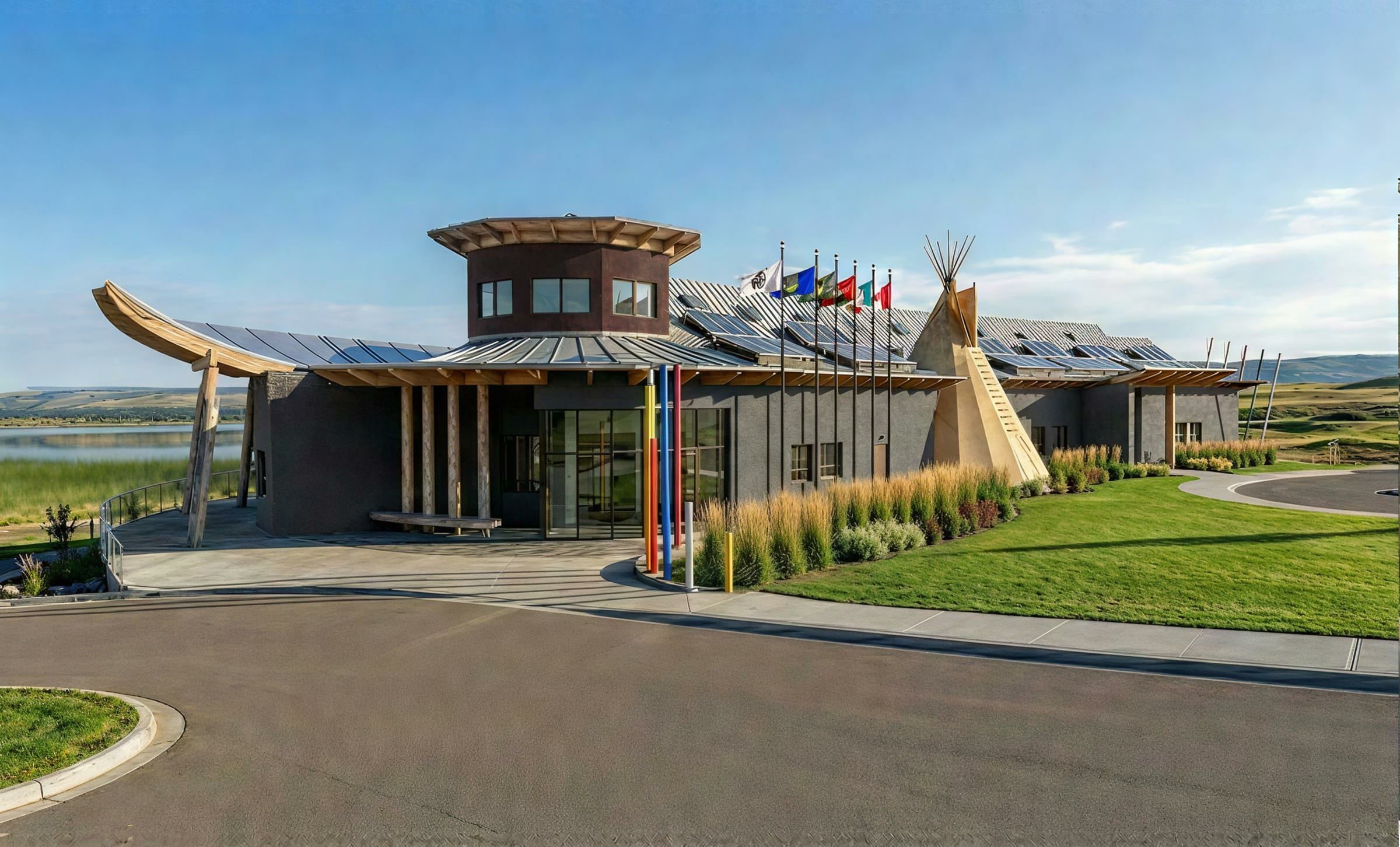
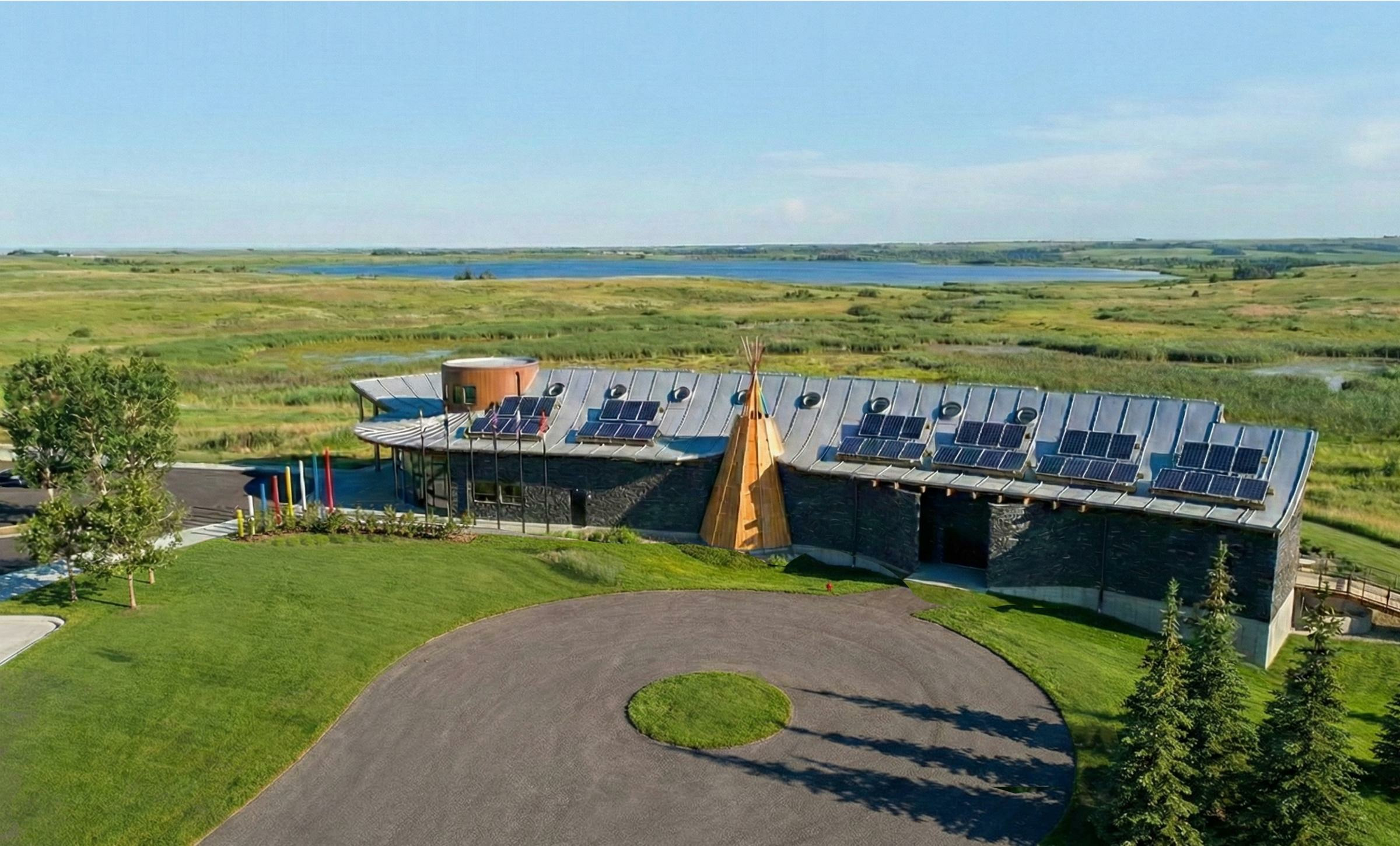
The Interpretive Centre and Museum gives the community of Frog Lake to share their stories and their history, from their perspective. It offers a variety of programming spaces that support the revival and protection of Plains Cree, including a Ceremony room, classroom, and museum, all of which connect to an interpretive trail that leads out into the land. The trail winds through the grounds, terminating at the existing National Historic Site.
These programming spaces facilitate cultural activities and gatherings, strengthening and celebrating the community and its stories. The building will provide language education opportunities with signage, information boards and other written documentation in Plains Cree first, and English second.
DESIGN
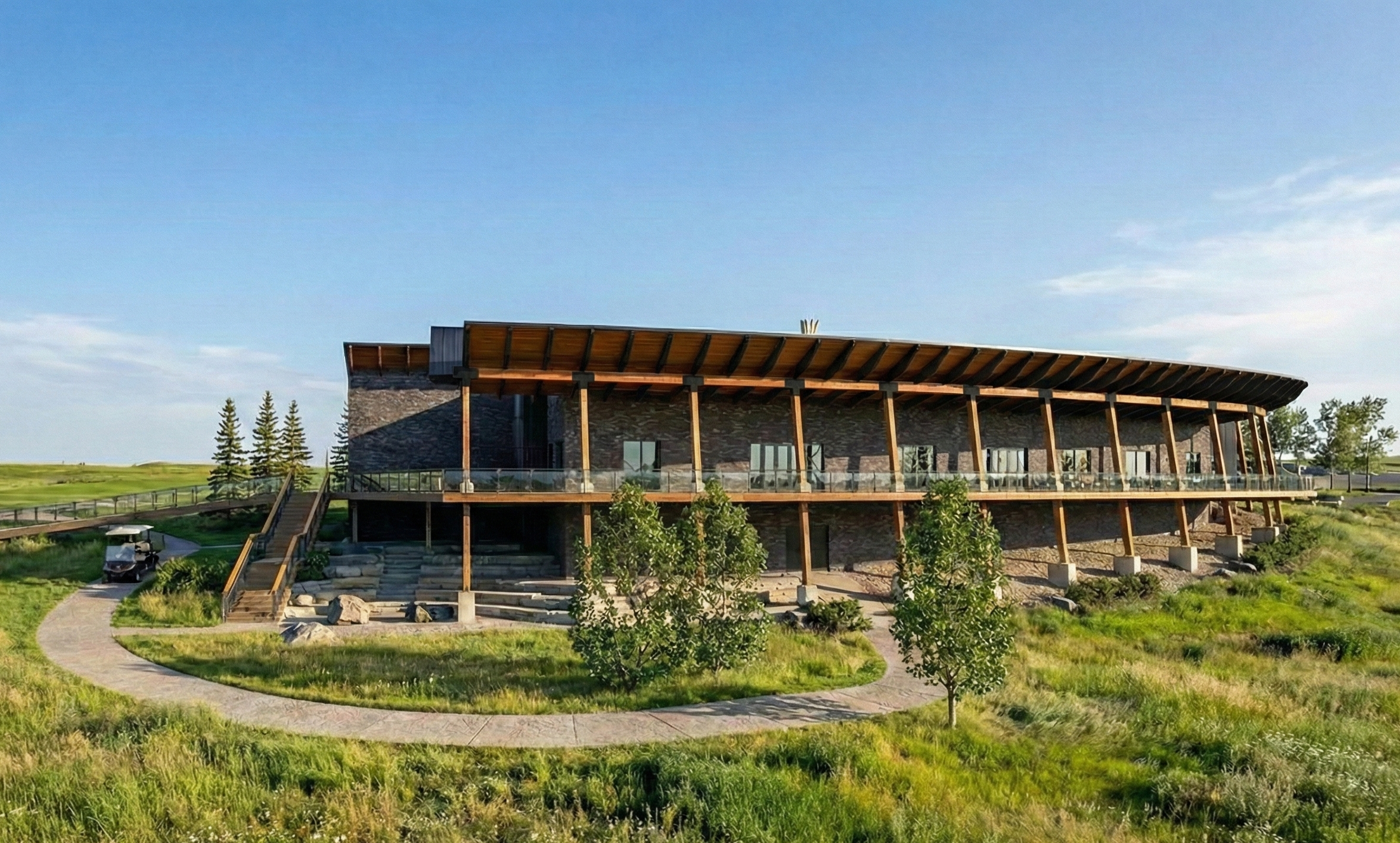
The building's form was inspired by the eagle; its floor plan was based on the form of a feather, while the building's cross-section is inspired by the wings of an eagle in flight. This motif extends to the exterior finishes: its brick pattern was inspired by the colours and textures of an eagle's wing.
Flagstone flooring greets visitors and extends throughout the building, guiding their journey toward the walking trail that will take them through the broader site.
SUSTAINABILITY
Although there are no plans to enroll the building in a third-party certification program, the design team is chasing net-zero for this project. Various forms of renewable energy are leveraged, including geothermal and solar.
Team Members
Lindsay Farr
Architect, AAA, BFA, M.Arch

Nina Christianson
Project Leader and Designer, MSc
Richard Isaac
Founding Principal Architect AAA, AIBC, NWTAA, SAA, FRAIC

Toni Chui
Senior Interior Designer, NCIDQ
Vivian Manasc
Founding Principal AOE, Architect, AAA, AIBC, NWTAA, SAA, FRAIC, MBA, LEED®AP, GCB.D, LLD (Hon)